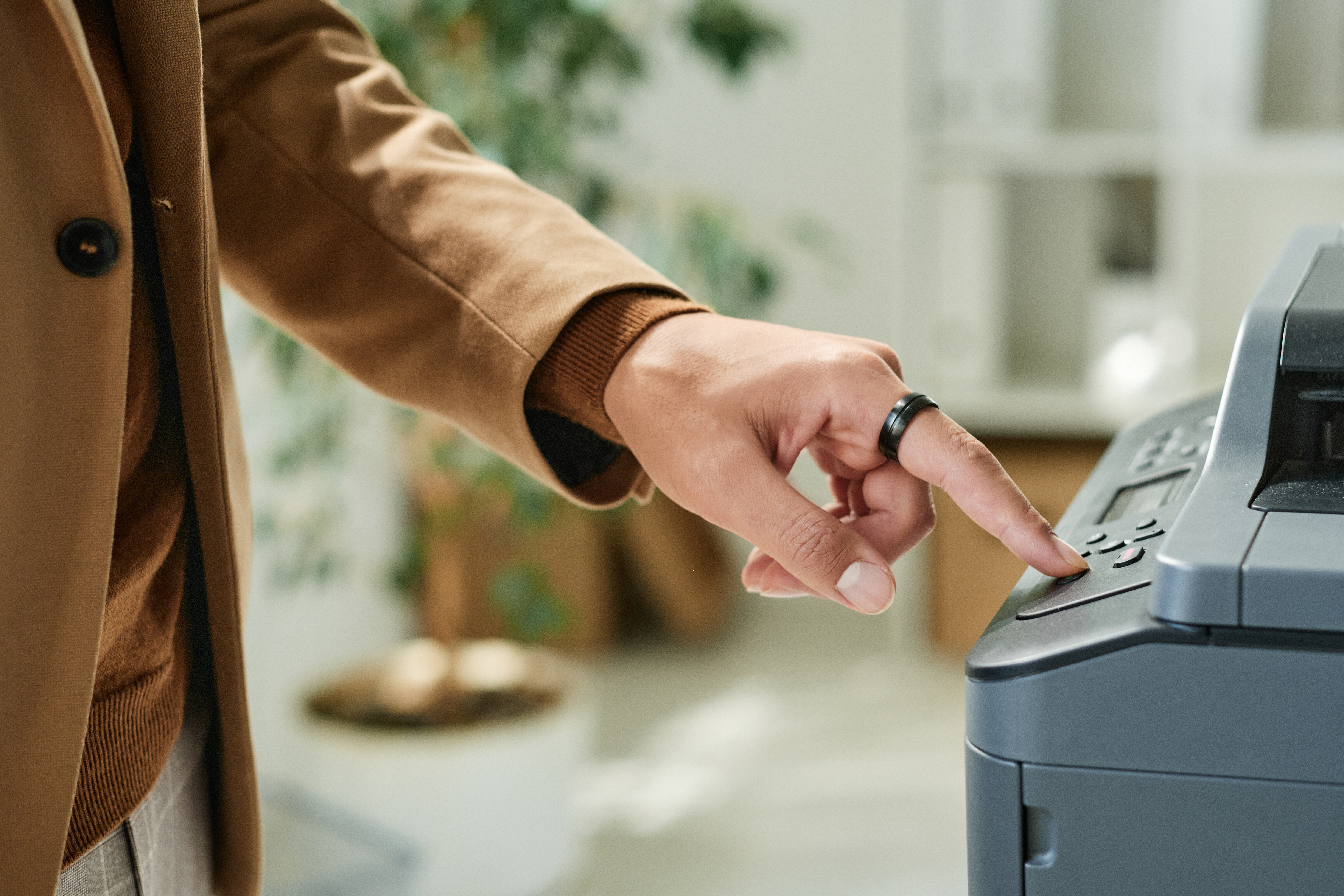
Walk past any office MFP at 5pm and you'll find at least one printout no one ever collected. In most offices, 8% of pages get printed and then forgotten. Some of those pages have other people's salaries on them.
The quiet data breach
Payslips, contracts, board minutes, patient files. The kinds of documents that have to be printed sometimes and absolutely cannot be left lying around. In most offices, they get left lying around all the time — because someone hit print and then went to a meeting, or got pulled away, or just forgot.
Under the Privacy Act, this counts as poor data handling. Under common sense, it counts as a breach waiting to happen.
How Follow-Me Print fixes it
Send your print job to a "secure queue" instead of straight to the device. Walk to any printer on your network, tap a card or enter a 4-digit PIN, and the job releases only when you're standing there.
Forget about it for 24 hours? It auto-deletes from the queue. The document never sits unattended in a tray.
The cost is less than you'd think
On a standard PaperCut deployment, Follow-Me Print adds around $15–$20 per device per month. For a five-person team with one MFP that's about the price of a coffee a fortnight — to remove the single biggest source of accidental document leakage in your office.
We can have it running in your business within two weeks. Most of our deployments take about 11 days end to end.
The quiet risk sitting in the output tray
In the average office, around eight per cent of print jobs are never collected. Some of those abandoned pages carry payslips, contracts, board minutes or client records, and they sit in a shared tray where anyone walking past can read or take them. It is one of the most common and least discussed ways that confidential information leaks, and it happens not through hacking but through ordinary forgetfulness.
How Follow-Me printing closes the gap
Follow-Me, or secure release, holds every print job in an encrypted queue instead of sending it straight to a device. The document only prints when the person who sent it walks up and authenticates with a card or a PIN. If they forget about it, the job is automatically deleted after a set period and never reaches paper at all. Nothing sits unattended, and every release is tied to a named user.
Why the cost is easy to justify
For a small team with a single multifunction device, secure release typically costs the equivalent of a couple of coffees per device each fortnight. Against that you are removing the single most common source of accidental document exposure, creating an audit trail of who printed what, and giving your practice a defensible position if a client or regulator ever asks. For firms handling sensitive material, it is one of the highest-value, lowest-effort controls available.
Building a defensible position
For practices that handle sensitive information, secure release does more than tidy up the output tray. It creates an audit trail of who printed what and when, which is exactly the kind of evidence that matters if a client or regulator ever asks how confidential material is handled. Combined with clear retention rules and restricted access, it turns an informal process into a defensible one. We configure that trail and the surrounding controls so your practice can demonstrate responsible handling, not just claim it.